Thinking about a dock for your Lake Almanor West property, or wondering how an existing one affects value and upkeep? You are not alone. Docks shape how you use the lake, what you spend to maintain it, and what buyers expect when you sell. In this guide, you will learn the main dock types, realistic budget ranges, and the local factors that matter most in Lake Almanor West. Let’s dive in.
How lake conditions shape your choice
Lake Almanor is a reservoir, so water levels can shift with hydroelectric operations, seasonal inflows, and drought patterns. That means the right dock must handle drawdowns, winter weather with occasional ice near shore, and wind exposure based on your specific cove or point. Your shoreline slope and bottom type also influence anchoring, gangway length, and construction methods.
Before you choose, note your site’s typical high and low water marks, wind direction, and access for equipment. These details guide whether a fixed or floating system will serve you best.
Fixed pile-supported docks
Fixed docks sit on driven or socketed piles with a deck above the water. They feel solid underfoot and can integrate with stairs and landscaping.
Pros
- Very stable for walking, loading, and long-term mooring.
- Can carry heavier loads and match a permanent home aesthetic.
- Preferred by some for safety and low movement.
Cons
- Higher install cost, especially in deeper water or if water levels vary.
- Vulnerable when the lake drops, which can leave the deck high and dry.
- Requires heavy equipment and deeper permitting. Winter ice can stress piles.
Use in Lake Almanor West
Fixed docks work best where water levels stay closer to target elevations or where piling can be set for expected drawdowns. Expect to plan for longer gangways if your frontage sees seasonal change.
Typical costs
- Materials and purchase for small to medium docks: about $8,000 to $30,000.
- Installation with piles and equipment: about $5,000 to $25,000 or more.
- Combined installed: roughly $15,000 to $55,000 or more.
- Annual maintenance: about $400 to $2,000.
Floating modular docks
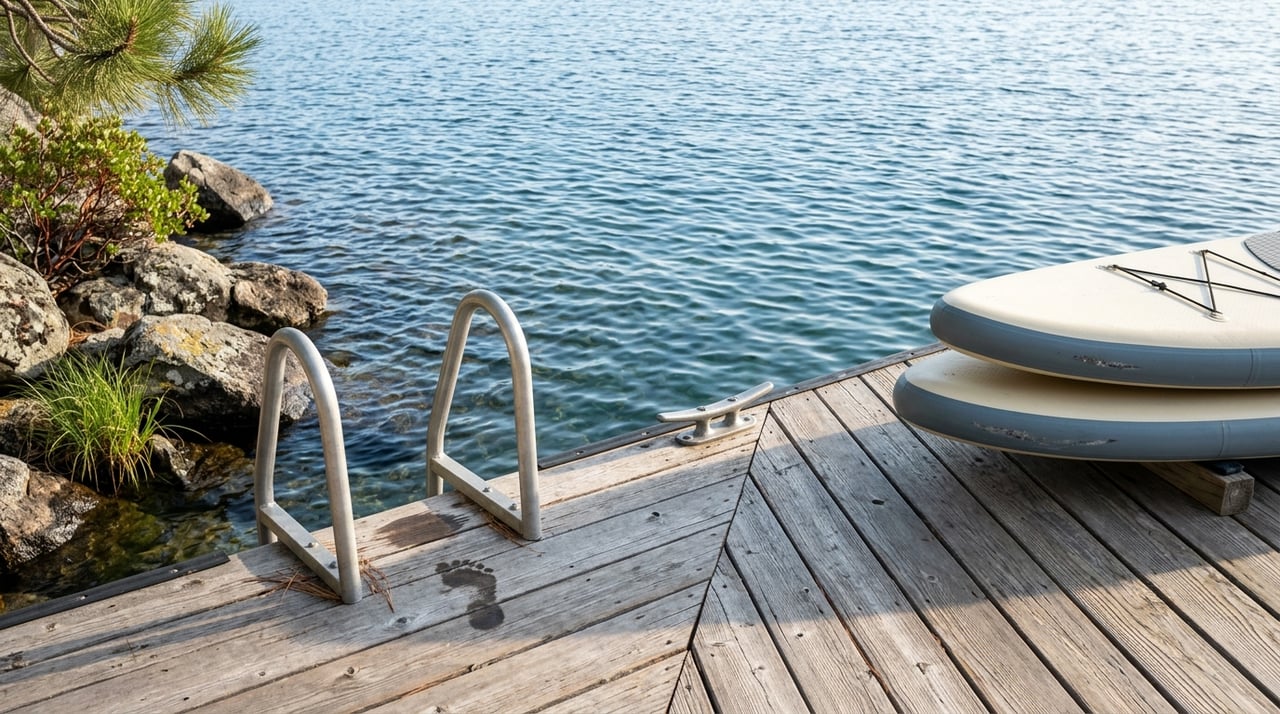
Floating docks use pontoons or modular floats and connect to shore with a hinged gangway. They rise and fall with the lake.
Pros
- Adjusts to water-level changes, which suits a reservoir environment.
- Often faster and less expensive to install, with modular expansion options.
- Can be removed or secured for winter, depending on design.
Cons
- Less rigid feel underfoot, especially if undersized.
- Requires solid anchoring to handle wind and waves. Floats and hardware need regular checks.
- Some materials can degrade with UV or impact.
Use in Lake Almanor West
Floating systems are popular for recreational boating and swimming where seasonal removal or flexible configuration helps. They are a strong fit if you expect drawdowns or ice.
Typical costs
- Basic floating platform (8–12 ft by 12–20 ft): installed roughly $5,000 to $18,000.
- Higher-end modular aluminum floating systems: installed roughly $8,000 to $30,000 or more.
- Annual maintenance: about $200 to $1,200 depending on size and components.
Hybrid systems and useful add-ons
You can mix fixed frames with floating segments to handle depth changes across your frontage. Accessories like boat lifts, swim ladders, handrails, lighting, and fenders improve safety and usability.
- Boat lifts: roughly $4,000 to $12,000 for small manual or electric models, or $15,000 to $40,000 or more for larger hydraulic or covered lifts.
- Lifts add permitting complexity and may need electrical power at the shore.
Materials that last in Sierra conditions
- Pressure-treated lumber is common and lower cost but needs sealing and can rot or splinter over time. Typical life is about 10 to 20 years with care.
- Cedar or redwood offer better rot resistance but still need maintenance.
- Composite decking reduces routine upkeep and resists rot. Expect some UV fade depending on product.
- Aluminum framing or decking is lightweight and corrosion resistant with long life, often used in modular floating systems.
- HDPE or polyethylene floats are durable and low maintenance. Foam-filled or sealed box floats work but can lose buoyancy if punctured.
- Use stainless steel or hot-dipped galvanized hardware. Match metals to avoid galvanic corrosion.
Permits and approvals to plan for
Most docks here require permits and coordination with several entities. Common stakeholders include Plumas County Planning and Building, Pacific Gas & Electric for reservoir-related easements, and state environmental agencies. If wetlands or specific shoreline impacts apply, federal review can be triggered.
Expect to produce site plans, structural and anchoring details, and proof of environmental compliance. Local associations or deed rules may also set design and footprint limits. Sellers should keep records of permits, plans, and past repairs. Buyers should make a dock inspection part of due diligence.
Budget ranges at a glance
- Floating platform installed: about $5,000 to $18,000.
- Modular aluminum floating system installed: about $8,000 to $30,000 or more.
- Fixed pile-supported dock installed: about $15,000 to $55,000 or more.
- Concrete or heavy-duty permanent structures: about $30,000 to $100,000 or more.
- Boat lifts and accessories: about $4,000 to $40,000 or more depending on size and type.
- Permitting and professional services: about $200 to $5,000 or more for permits, plus about $500 to $3,000 or more for engineering or surveys when required.
- Annual maintenance: about $200 to $2,000 based on materials and exposure.
Actual costs vary with size, materials, shoreline slope, access for equipment, anchoring complexity, and permit scope. Always seek 2 to 3 local bids.
Maintenance and winter prep
A consistent maintenance plan protects safety and value in Lake Almanor’s four-season climate.
- Annually inspect floats, anchors, chains, bolts, and gangway hinges. Replace corroded hardware and damaged floats.
- Wash algae, apply non-slip treatments, and replace cracked or rotted boards.
- Seal or stain wood every 1 to 3 years based on exposure.
- Pre-winter, decide whether to remove or secure floats and accessories. After winter, inspect for ice abrasion, shifted anchors, and wood rot.
- After big wind events, check for loosening or displacement.
Common failure points include rot at waterlines and connections, float punctures, anchor chafe, and fastener corrosion. Early repairs cost less than major fixes later.
Resale value and buyer expectations
A permitted, well-maintained dock with clear documentation increases marketability. Boat owners often value stable mooring and lifts. Casual users may favor simple floating platforms for swimming and lounging. Overly customized or commercial-scale docks can narrow buyer appeal.
For sellers, keep maintenance logs, permits, and photos. If you upgrade before listing, prioritize safety, compliant permitting, and broadly appealing design. For buyers, include a professional dock inspection and confirm recorded rights or easements as part of your offer strategy.
How to choose your dock type
- Start with site realities: water-level range, wind and wave exposure, slope, and bottom type.
- Decide the primary use: secure boat mooring and lifts, or flexible recreation and swimming.
- Match budget and upkeep: fixed docks cost more upfront and need thoughtful design for drawdown; floating systems are flexible with lower install cost.
- Plan for winter: decide if you want seasonal removal or a design that can stay in place.
- Confirm permits and utilities: align your plan with local rules and reservoir easements.
Ready to evaluate your specific shoreline, dock options, and how the right setup can support your goals and resale? Connect with the local team at Berkshire Hathaway HomeServices Lake Almanor Real Estate for neighborhood-specific guidance and trusted vendor introductions.
FAQs
Which dock type fits Lake Almanor West best?
- Floating docks often suit fluctuating water levels and winter conditions, while fixed docks can work well where elevations are stable and piles are designed for drawdowns.
Do I need permits for a new dock in Lake Almanor West?
- In most cases yes, with Plumas County review, potential PG&E easements, and state environmental oversight; confirm requirements before any construction.
How much should I budget for a dock project?
- Expect roughly $5,000 to $18,000 for basic floating platforms, $8,000 to $30,000 or more for modular aluminum systems, and $15,000 to $55,000 or more for fixed docks, plus permits.
What winter risks should I plan for?
- Seasonal drawdown, ice action near shore, UV and snow exposure, and wind-driven waves are the main risks; secure or remove vulnerable components before winter.
Will a dock add value when I sell?
- A permitted, well-maintained dock with clear records typically boosts marketability and can add value for buyers who plan to use it, though the exact impact varies by dock quality and demand.